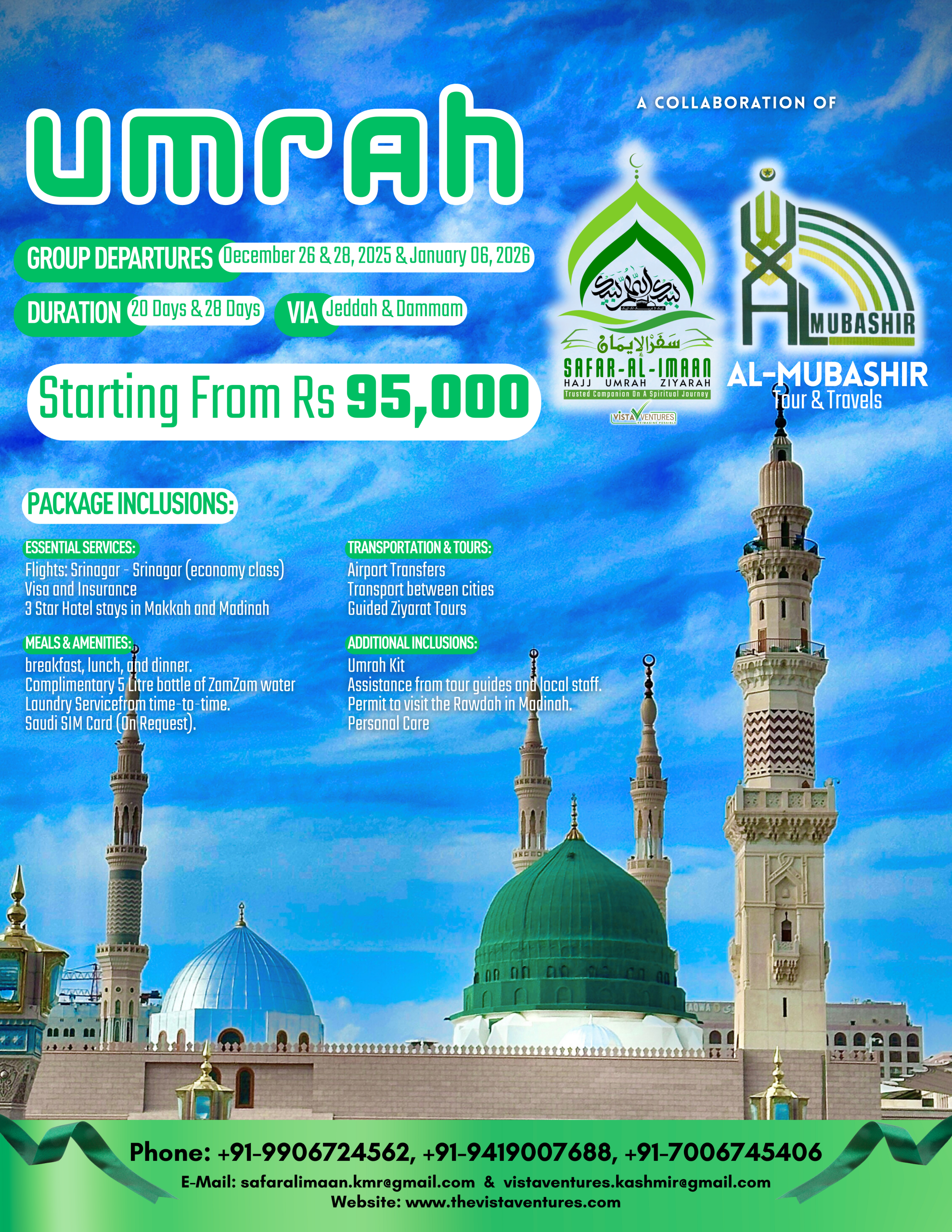
We understand that performing Umrah is a profoundly personal and spiritual ambition. Our carefully designed Umrah packages go beyond simple travel arrangements; they are crafted to ensure your pilgrimage to the Holy Cities of Makkah and Madinah is conducted with the utmost comfort, convenience, and spiritual fulfilment.
Here are the details for our upcoming Umrah packages, including departure dates & duration:

E-MAIL: safaralimaan.kmr@gmail.com
COMPREHENSIVE PACKAGE DETAILS
INCLUSIONS:
Essential Services:
- Flights: Round-trip economy class airfare, specifically from Srinagar to Srinagar.
- Visa and Insurance: We provide assistance with the visa application process and cover the cost of the visa and travel insurance.
- Accommodation: Comfortable Hotel stays in both Makkah and Madinah, strategically located in the vicinity of the Haram.
Transportation and Tours:
- Airport Transfers: Round-trip transfers are arranged between the airport and your hotel.
- Local Transport: Group or private transportation is included for transfers between cities (e.g., Makkah to Madinah).
- Ziyarat Tours: Enjoy guided tours to significant historical and holy sites in both Makkah and Madinah.
- Extended Ziyarat: Tours also include important sites in Taif & other significant locations.
Meals and Amenities:
- Daily Meals: Enjoy full-board or buffet-style meals, which include breakfast, lunch, and dinner.
- Zamzam Water: A complimentary 5 Litre bottle of ZamZam water is provided.
- Laundry Service: Laundry services are offered from time-to-time during your stay.
- Saudi SIM Card: A local SIM card for communication is available on request.
Additional Inclusions:
- Umrah Kit: A helpful welcome kit with essentials such as Ihram, bags, etc.
- Guidance: Receive full assistance from our experienced tour guides and local staff, including guidance on the correct procedures for performing Umrah – before & during pilgrimage.
- Rowdah Permit: We arrange for a permit to visit the Rawdah (Riyad ul-Jannah) in Masjid an-Nabawi in Madinah.
- Personal Care & 24/7 customer support
EXCLUSIONS:
- Private Transfers.
- GST 5%
- Additional charges apply on excess luggage.
- Tour operator or Guide will not be held accountable for loss of luggage on Airports.
- No room service will be provided.
- Facilities, services and amenities which are not indicated in this package.
- No refund is applicable on unutilised or unused services.
- Refund cannot be claimed if the stay is curtailed.
ITINERARY
DAY 01:
Arrival in Makkah: Upon arriving at Srinagar International Airport, you will assemble for your departure flight to New Delhi, where from you will board a connecting flight to Jeddah, Saudi Arabia. Once you land in Jeddah, you will first proceed through the necessary immigration and customs formalities, after which you will be met by our friendly local representative. From there, you will be promptly transferred to the Holy City of Makkah Mukarramah (a journey estimated to take approximately 2 hours). After checking into your hotel, you will have time to relax and settle in before being assisted by our representative to perform your first Umrah. Meals will be arranged in accordance with your specific flight arrival time.
DAY 02:
In Makkah – Your time in Makkah is wholly dedicated to deep devotion and spiritual growth within the sacred bounds of Masjid al-Haram. Here, you will spend your day engaged in continuous acts of Ibaadat (worship) and profound personal reflection, focusing specifically on performing Tawaf (circumambulation of the Kaaba), reciting the Quran (Tilawat), and making heartfelt Duas (supplications).
DAY 03:
In Makkah – Your time in Makkah includes a comprehensive guided Makkah Ziyarat (tour of holy sites). This enriching experience will take you to historically significant locations, including Mina, Arafat, and Muzdalifa, the plains where key Hajj rituals are performed. You will also visit the famed mountains of Jabal e Noor (where the Cave of Hira is located) and Jabal e Soor (where the Prophet Muhammad (PBUH) sought refuge), as well as the revered graveyard of Jannat ul-Mualla. Additionally, an optional trip to Masjid Aisha will be available for those wishing to enter a new state of Ihram and perform a second Umrah.
DAY 04:
In Makkah – Your schedule is designed to grant you ample personal time, allowing you to focus completely on your spiritual objectives, including rest and engaging in fervent worship (Ibaadat). This includes the freedom to perform multiple cycles of Tawaf at Masjid al-Haram, ensuring you can spend peaceful and dedicated time in remembrance and devotion within the Holy Sanctuary.
DAY 05:
In Makkah – You will have the flexibility to manage your time according to your spiritual needs; this may include taking a well-deserved period of rest and relaxation. Alternatively, if you feel spiritually energized, you have the option to undertake a second Umrah, departing from the designated Miqat boundaries of Tan’eem or Jurana. Throughout this free time, we highly encourage you to continue enhancing your spiritual state by performing voluntary prayers (Nawafil) and reciting the Holy Quran (Tilawat).
DAY 06:
In Makkah – The day is purposefully reserved for personal worship (Ibadat), voluntary circumambulation (Tawaf), and profound reflection, allowing pilgrims ample time for individual spiritual focus. As evening approaches, it is highly recommended to dedicate this peaceful time to offering quiet supplications (Duas) and engaging in deep meditation within the serene atmosphere of the Holy Haram.
DAY 07:
In Makkah – The day offers a valuable opportunity for pilgrims to revisit the sacred sites of their choice, or alternatively, to perform an additional Umrah for spiritual gain. The evening hours are then reserved for personal leisure, encouraging dedicated time for Ibaadat (worship) and deep reflection.
DAY 08:
In Makkah – You will have a dedicated full day set aside for intensive worship within Masjid al-Haram, allowing ample time for personal prayers, performing the circumambulation (Tawaf), and reflecting through Qur’an recitation. Additionally, pilgrims will have the option to visit Masjid Aisha (also known as Taneem) for those who wish to renew their state of Ihram for an optional additional Umrah.
DAY 09:
In Makkah – The entire day is set aside to be at your complete disposal for Ibaadat (worship) and the offering of personal Duas (supplications). In addition, there may be an optional organized activity in the evening, such as a focused lecture or a group religious session, should it be scheduled for that day.
Day 10:
In Makkah – Your final full day in Makkah Mukarramah is dedicated to concluding your time in the Holy City with reverence and deep devotion. This is the day to perform the Farewell Circumambulation (Tawaf al-Wida), a profound concluding ritual required before your departure. As you circle the Ka’bah one last time on this leg of your journey, seize the opportunity to make heartfelt supplications (Duas), reflecting on your spiritual accomplishments and asking for acceptance of your Umrah before preparing for your departure to Madinah next day.
DAY 11:
Makkah to Madinah – Upon concluding your stay in Makkah, you will check out from your hotel and begin the transfer to Madinah Munawwarah, which involves an approximate 4.5- to 5-hour journey. Immediately upon arrival in the radiant city, you will check in to your accommodation to rest and refresh. Later that day, you will be guided to Masjid an-Nabawi (S.A.W), where you will offer prayers, present your respectful Salutations (Salam) to the Prophet Muhammad (S.A.W), and dedicate time for personal supplications (Duas).
DAY 12:
In Madinah – The optional Madinah Ziyarat (sightseeing tour of sacred places) is a guided excursion to key historical sites in and around the city. This tour includes visits to Masjid Quba, the first mosque ever built in Islam, and Masjid Qiblatain, known as the Mosque of Two Qiblas, where the direction of prayer was changed from Jerusalem to Makkah. During this tour, you will have the blessed opportunity to offer two Rakats of prayer in both Masjid Quba (which carries the reward of performing an Umrah) and Masjid Qiblatain. Additionally, the Ziyarat includes stops at the Saba Masajid (The Seven Mosques), a complex near the site of the Battle of the Trench, and Jabal e Ohud (Mount Uhud), the significant location of the Battle of Uhud.
DAY 13:
In Madinah – You will spend a reflective day within the sacred confines of Masjid an-Nabawi, dedicating your time entirely to worship (Ibaadat), reciting the Quran (Tilawat), and seeking sincere forgiveness from Allah (Astaghfaar).
DAY 14:
In Madinah – Guests will enjoy a dedicated Reflection Day in Madinah, providing ample time at leisure to focus on prayers and personal supplications (Duas) within the sacred confines of Masjid an-Nabawi. For those who wish to explore further, there is an optional opportunity to take a walk to significant sites such as the historic Masjid Quba, the first mosque built by the Prophet Muhammad (PBUH), or the revered cemetery of Jannat al-Baqi.
DAY 15:
In Madinah – Dedicate your valuable time during this sacred journey to expressing deep gratitude through Shukr prayers and by engaging in voluntary Nawafil prayers. Furthermore, seize this blessed opportunity to offer fervent Duas (supplications), not only seeking blessings and forgiveness for yourself but also extending your prayers to encompass the well-being and welfare of the entire Muslim Ummah.
DAY 16:
In Madinah – Guests will have the opportunity to participate in optional Ziyarat (sightseeing) tours, which include visits to important historical and sacred sites in Madinah, such as the revered Jannat al-Baqi cemetery, Mount Uhud, and various other significant Masajid (mosques) in the vicinity. Following these tours, the evening is designated for quiet remembrance and personal prayer, allowing pilgrims dedicated time for spiritual reflection and worship in the tranquility of the Holy City.
DAY 17:
In Madinah – After the organized activities, a free day is provided specifically for rest and continued Ibaadat (worship). This dedicated time allows pilgrims the flexibility to fully engage in personal spiritual practices such as reciting the Qur’an (Tilawat), attending beneficial religious sessions or lectures held within the mosque, or focusing on extra prayers like Tahajjud in the sanctity of the Haram.
DAY 18:
In Madinah – The culmination of your pilgrimage is dedicated as a Day of Astaghfaar, where your primary spiritual focus shifts to repentance, gratitude, and supplication. This crucial final day is the time to sincerely reflect on your journey, seek forgiveness from Allah (SWT) for any shortcomings, and express profound gratitude for the opportunity to perform Umrah. Furthermore, you should utilize this time to offer heartfelt farewell Duas and earnestly pray for the acceptance of your Umrah and all your acts of worship.
DAY 19:
In Madinah – As your spiritual journey draws to a close, your final day in the Holy City of Madinah is dedicated to preparation for departure and a poignant farewell. We encourage you to spend your last precious moments in Masjid an-Nabawi, utilizing this time for quiet prayer and reflection before offering your heartfelt farewell Salaam to the Prophet Muhammad (S.A.W), marking the conclusion of your visit to this blessed sanctuary.
DAY 20:
Upon concluding your stay, following breakfast, you will check out from your hotel and begin the approximately 5 to 6-hour transfer to Jeddah Airport. You will then depart, carrying with you a purified heart and an uplifted soul, full of cherished memories from this blessed and spiritual journey.
STEPS TO PERFORM UMRAH

Performing Umrah is a sacred spiritual journey involving a set of specific rituals in and around the Kaaba in Makkah. For people traveling from other countries, the process involves preparation before departure and four main pillars of the ritual itself.
Here is a step-by-step guide, in detail, for international pilgrims:
PRE-TRAVEL & IHRAM (The Sacred State)
Preparation (Before Travel)
- Spiritual Cleansing: It is a Sunnah (recommended practice) to perform a full ritual bath (Ghusl), trim nails, and remove excess body hair before entering the state of Ihram.
Entering Ihram at or before the Miqat (The Designated Boundary Of Makkah)
- Wear the Ihram Garments:
- Men should wear the two unstitched white cloths (Izar for the lower body and Rida for the upper body). No stitched clothing, head coverings, or perfumed products are allowed.
- Women should wear modest, ordinary clothes (usually an abaya and headscarf). The face and hands must remain uncovered.
- Make the Intention (Niyyah): This must be done before crossing the Miqat (the designated boundary surrounding Makkah). For air travelers, the pilot usually announces when the aircraft is approaching the Miqat, and you should make the intention:
لَبَّيْكَ اللَّهُمَّ عُمْرَةً
“Labbayk Allāhumma ‘Umrah.”
(O Allah, here I am making Umrah.)
- Recite the Talbiyah: Immediately after making the Niyyah, begin reciting the Talbiyah (Men loudly, Women softly):
لَبَّيْكَ اللَّهُمَّ لَبَّيْكَ، لَبَّيْكَ لَا شَرِيكَ لَكَ لَبَّيْكَ، إِنَّ الْحَمْدَ وَالنِّعْمَةَ لَكَ وَالْمُلْكَ، لَا شَرِيكَ لَكَ
“Labbayka Allāhumma Labbayk, Labbayka lā sharīka laka Labbayk. Inna al-ḥamda wan-ni‘mata laka wal-mulk, lā sharīka lak.”
(Here I am O Allah, here I am. Here I am, You have no partner, here I am. Indeed, all praise, grace, and sovereignty belong to You. You have no partner.)
- Note: From this point, you are in the state of Ihram, and certain actions like cutting hair/nails, applying perfume, and arguing are forbidden.
TAWAF AL-UMRAH (Circumambulation)
Upon arriving at the Masjid al-Haram, proceed to the Kaaba.
- Stop Talbiyah: Stop reciting the Talbiyah as you reach the Kaaba area.
- Start at the Black Stone (Hajar al-Aswad): Start your seven circuits here.
- Face the Kaaba, raise your right hand, and say:
بِسْمِ ٱللَّٰهِ اَللَّٰهُ أَكْبَر
“Bismillahi Allāhu Akbar”
“In the Name of Allah, Allah is the Greatest“
If possible, you may kiss, touch, or simply point toward the Black Stone.
- Face the Kaaba, raise your right hand, and say:
- Perform 7 Circuits: Walk around the Kaaba seven times in an anti-clockwise direction, keeping the Kaaba on your left.
- Men should perform Raml (brisk, short-stepped walking) for the first three circuits.
- Men should perform Raml (brisk, short-stepped walking) for the first three circuits.
- Dua (Supplication): There is no mandatory Du’a for each circuit, but it is Sunnah to recite the following between the Rukn Yamani (Yemeni Corner) and the Hajar al-Aswad:
رَبَّنَا آَتِنَا فِي الدُّنْيَا حَسَنَةً وَفِي الْآَخِرَةِ حَسَنَةً وَقِنَا عَذَابَ النَّارِ
“Rabbana atina fid-dunya hasanatan wa fil-akhirati hasanatan wa qina ‘adhaban-nar.”
“Our Lord, give us in this world [that which is] good and in the Hereafter [that which is] good and protect us from the punishment of the Fire.”
- Prayer after Tawaf: After completing the seven circuits, cover your shoulders (Men, if you had uncovered them), and pray two units (Raka’at) of Nafl Salah, ideally behind Maqam Ibrahim (Station of Abraham).
SA’I (Walking Between Safa and Marwah)
- Head to Safa: Proceed to the hill of Safa.
- Face the Kaaba and Make Du’a: Climb Safa (or stand on the platform), face the Kaaba, raise your hands, praise Allah, and make a heartfelt Du’a.
- Walk/Run to Marwah: Walk from Safa to the hill of Marwah.
- Men should jog lightly (Ramal) between the two green fluorescent lights, while women should continue walking normally.
- Repeat: When you reach Marwah, climb (or stand on the platform), face the Kaaba, and make Du’a. This completes one lap.
- Complete 7 Laps: Repeat the journey, ensuring the seven laps end at Marwah. (Safa to Marwah is 1, Marwah to Safa is 2, etc.)
HALQ OR TAQSIR (Cutting the Hair)
This is the final step that ends the state of Ihram and completes your Umrah.
- Men (Halq): The Sunnah is to shave the head completely (Halq). Trimming the hair all over is permissible (Taqsir), but shaving is superior.
- Women (Taqsir): Must only trim a small amount of hair—about the length of a fingertip—from a lock of hair.
Once the hair is cut, all restrictions of Ihram are lifted, and your UMRAH is COMPLETE.
ZIYARAT TOURS
PLACES TO VISIT IN MAKKAH

Al-Masjid al-Ḥaram
Al-Masjid al-Ḥaram (The Sacred Mosque), located in Makkah, Saudi Arabia, is the holiest and largest mosque in the world, holding immense significance for Muslims globally. It encompasses the Kaaba, the cubic structure toward which all Muslims face during their five daily prayers (Qibla), and around which pilgrims perform the ritual circumambulation (Tawaf). The mosque is the central destination for the Hajj (the annual pilgrimage, one of the Five Pillars of Islam) and the lesser pilgrimage, Umrah, hosting millions of worshippers each year. Within its expansive grounds are other important sites, including the Black Stone (Hajar al-Aswad), the Station of Abraham (Maqam Ibrahim), and the Zamzam Well. The mosque has undergone numerous expansions throughout history to accommodate the increasing number of pilgrims, solidifying its role as the spiritual heart of Islam.

Safa and Marwa
Safa and Marwa are two small, historic hills located within the Masjid al-Haram (The Grand Mosque) in Makkah, Saudi Arabia. They are profoundly significant in Islam as the site of the ritual known as Sa’i (meaning “to strive” or “to walk”), an obligatory part of both the Hajj and Umrah pilgrimages. This ritual commemorates the perseverance and deep faith of Prophet Ibrahim’s (Abraham’s) wife, Hajar (Hagar). When left in the barren valley of Makkah with her infant son, Prophet Ismail (Ishmael), Hajar desperately ran back and forth between Safa and Marwa seven times in search of water. Her struggle was answered by God with the miraculous gushing forth of the Zamzam Well. Pilgrims today walk or lightly jog between the two points, covering the distance seven times, to symbolically re-enact Hajar’s unwavering effort and trust in Allah’s providence.

Mina
Mina, often called the “City of Tents,” is a sacred valley located about seven kilometers east of Makkah, Saudi Arabia. It is one of the most important holy sites integral to the annual Hajj pilgrimage. Pilgrims spend several days and nights here, most notably on the 8th, 11th, and 12th of the Islamic month of Dhul-Hijjah. The central ritual performed in Mina is the Rami al-Jamarat, or the symbolic stoning of the devil, where pilgrims cast pebbles at three stone pillars (the Jamarat). This act commemorates the Prophet Ibrahim’s (Abraham’s) defiance of Satan’s temptation. The entire valley transforms into a massive, organized temporary city, utilizing over 100,000 permanent, fire-resistant tents to accommodate millions of pilgrims, underscoring the principles of equality and devotion during the Hajj.

Arafat
Arafat is a significant holy site consisting of a vast plain and the small granite hill known as Jabal ar-Rahmah (Mount of Mercy), located about 20 km southeast of Makkah. It is the single most essential ritual site of the annual Hajj pilgrimage.On the 9th day of Dhul-Hijjah (the Islamic calendar’s final month), known as the Day of Arafah, pilgrims must spend the time from noon until sunset standing in contemplative vigil on the plain. This period, called wuquf, is the spiritual climax of Hajj, a time for intensive prayer, seeking forgiveness, and sincere repentance, as the Prophet Muhammad ﷺ is reported to have said, “Hajj is Arafat.” It is also the location where he delivered his final sermon. Failure to be present at Arafat on this specific day invalidates the entire Hajj pilgrimage.

Muzdalifah
Muzdalifah is a significant, open plain located near Makkah, nestled between the holy sites of Mina and Mount Arafat. It plays a crucial role in the annual Hajj pilgrimage, specifically on the night following the Day of Arafat (the 9th of Dhul Hijjah). After sunset, millions of Muslim pilgrims travel here to jointly perform the sunset (Maghrib) and evening (Isha) prayers. The night is spent under the open sky, a profound and humbling experience symbolizing unity and equality before God. Most importantly, it is in Muzdalifah that pilgrims traditionally gather small pebbles, which they will use the following day in the symbolic ritual of “Stoning the Devil” (Rami al-Jamarat) in Mina. This sacred stop provides a moment of rest, reflection, and spiritual preparation for the final, demanding stages of the Hajj journey.

Jamarat
The Jamarat are three stone structures located in the city of Mina, near Makkah, and are the focal point of a major ritual during the annual Hajj pilgrimage called Rami al-Jamarat, or “Stoning of the Devil.” This ritual is a symbolic reenactment of the Prophet Ibrahim’s (Abraham’s) defiance when the Satan (Shaitan) attempted to tempt him at three separate points to disobey God’s command to sacrifice his son. Pilgrims throw seven small pebbles at each of the three walls (formerly pillars)—Jamrat al-Sughra (Small), Jamrat al-Wusta (Middle), and Jamrat al-Aqaba(Large)—as an affirmation of their commitment to reject evil and temptation. To manage the millions of pilgrims, a multi-level pedestrian bridge, the Jamarat Bridge, was constructed around the sites to allow safe and efficient performance of this important rite.

Masjid al-Namirah
Masjid Nimrah (or Masjid al-Namirah) is a historically significant mosque located in Wadi Uranah, adjacent to the plains of Mount Arafat near Makkah. It is revered in Islamic history as the location where the Prophet Muhammad ﷺ camped and delivered a vital part of his Farewell Sermon (Khutbah al-Wada’) during his final Hajj pilgrimage. Today, the mosque plays a central role in the annual Hajj rites. On the Day of Arafat (9th of Dhul Hijjah), the annual Hajj sermon is delivered from its pulpit, and pilgrims gather there to perform the combined and shortened Dhuhr and Asr prayers in congregation. Notably, while the front part of the mosque lies outside the boundary of Arafat (in Wadi Uranah), the larger, rear section is within the official limits, and pilgrims must ensure their wuquf (standing) is within the Arafat boundary for their Hajj to be valid.

Jabal al-Nour
Jabal al-Nour (Mountain of Light) is a hugely significant holy site located near Makkah, renowned throughout the Muslim world. Its profound importance lies in the Cave of Hira (Ghar-e-Hira), a small grotto situated near its summit. It was in this cave, where Prophet Muhammad ﷺ often retreated for solitude, that he received the first revelation of the Holy Quran from the Angel Jibreel. This monumental event, which marked the beginning of his prophethood and the message of Islam, has made the mountain a beacon of spiritual light and a place of deep reflection and pilgrimage for Muslims worldwide.

Jabal al-Thawr
Jabal al-Thawr, also known as Jabal e Soor or Mount Thawr, is a mountain in Makkah, Saudi Arabia, of immense religious and historical significance in Islam. It is famously home to the Cave of Thawr (Ghar e Soor), where the Prophet Muhammad ﷺ and his companion, Abu Bakr al-Siddiq (May Allah be pleased with him), sought refuge for three days and nights during their migration (Hijra) from Makkah to Madinah, fleeing from the Quraysh persecutors. The site is a powerful symbol of faith and Divine protection, as it is widely recounted that a spider wove a web and a pair of doves nested at the cave’s entrance, leading the pursuing Makkans to believe no one had entered. This event, mentioned indirectly in the Quran, marks a pivotal moment in the early history of Islam and is frequently visited by pilgrims performing Hajj or Umrah.

Jannat il-Mualla
Jannat il-Mualla, also known as Al-Hajun, is a historic and highly revered cemetery located in the holy city of Makkah, Saudi Arabia, situated approximately one kilometer north of the Masjid al-Haram (Grand Mosque). This sacred burial ground pre-dates Islam and holds immense spiritual significance as the resting place of many prominent figures from early Islamic history. Most notably, it is the grave site of the Prophet Muhammad’s ﷺ first wife, Khadijah bint Khuwaylid, his grandfather Abdul Muttalib, and his uncle Abu Talib. Pilgrims visiting Makkah often go to Jannat il-Mualla to pay their respects and reflect upon the lives and sacrifices of these key individuals who played foundational roles in the establishment of Islam. Today, in line with Islamic tradition, the graves are marked simply with rocks and surrounded by a white wall, serving as a powerful reminder of humility and the transient nature of life.
Masjid e Jurana
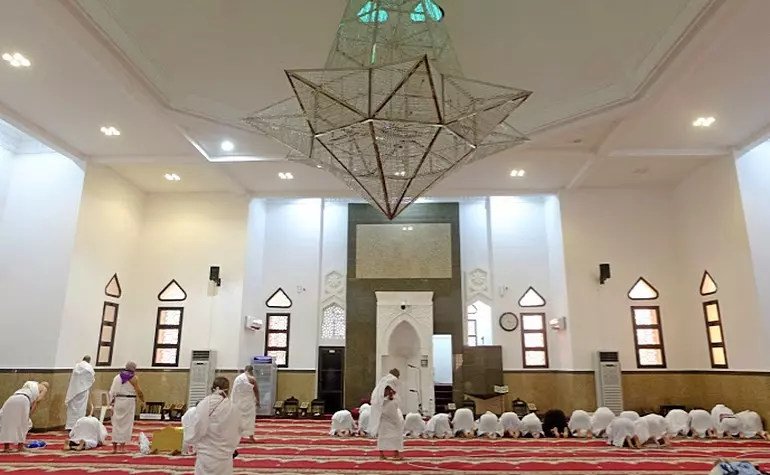
Masjid e Jurana is a historically significant mosque located about 24 kilometers northeast of Masjid al-Haram in Makkah. Its importance stems from the fact that it is the location where the Prophet Muhammad ﷺ entered into the state of Ihram (the sacred state for pilgrimage) to perform his Umrah after the Battle of Hunayn in 8 AH. Consequently, the mosque serves as one of the designated Miqat points—places where pilgrims must assume Ihram—especially for those residing within the boundaries of the Haram area who wish to perform an additional Umrah. Visiting Masjid e Jurana allows pilgrims to follow the Prophet’s ﷺ Sunnah (tradition) and connect deeply with a momentous location in early Islamic history.

Masjid Aisha
Masjid Aisha is a significant mosque located in the Taneem area, approximately 7.5 kilometers north of the Kaaba in Makkah. It is one of the designated Miqats—the boundary points outside the sacred area of the Haram—from which pilgrims must enter the state of Ihram (a consecrated state for pilgrimage) before performing Umrah. The mosque is named after Aisha bint Abi Bakr, the wife of Prophet Muhammad ﷺ, who was instructed by the Prophet to enter into Ihram from this spot to perform a secondary Umrah during the Farewell Pilgrimage. Today, it serves as the most convenient Miqat for residents of Makkah and for pilgrims who wish to perform an additional Umrah while staying in the city.

Masjid Jinn
Masjid Jinn (Mosque of the Jinn) in Makkah is a historical holy site highly significant in Islamic tradition. It is built upon the location where a group of Jinn (invisible beings created from fire) are said to have gathered to listen to the Prophet Muhammad’s ﷺ recitation of the Holy Quran, after which they embraced Islam and pledged their allegiance to him.
This extraordinary event is even referenced in the Quran in Surah Al-Jinn (Chapter 72). Due to its profound association with the submission of the Jinn, the mosque is also sometimes referred to as the Masjid al-Bay’ah (Mosque of the Pledge of Allegiance). Situated near the Jannat al-Mu’alla graveyard, it remains one of the important mosques for pilgrims visiting Makkah, serving as a powerful reminder of the universal reach of Islam’s message.

Bayt al-Mawlid
Bayt al-Mawlid (Arabic: بَيْت ٱلْمَوْلِد) literally means “The House of the Birth” and is the traditional site in Makkah where the Prophet Muhammad ﷺ is believed to have been born. Located near the Masjid al-Haram (Grand Mosque), this site holds immense spiritual and historical significance for Muslims worldwide, as it represents the humble beginnings of Islam’s central figure. While the original structure no longer exists, the location has historically been preserved, at one point converted into a place of devotion and later purchased by the mother of the Abbasid Caliph Harun al-Rashid. Today, the revered site is occupied by the Makkah Al-Mukarramah Library, which was built over the spot by the founding king of Saudi Arabia, King ‘Abdul-‘Aziz ibn Saud. Pilgrims often visit the location during Hajj and Umrah to connect with the life and journey of the Prophet.
Taif
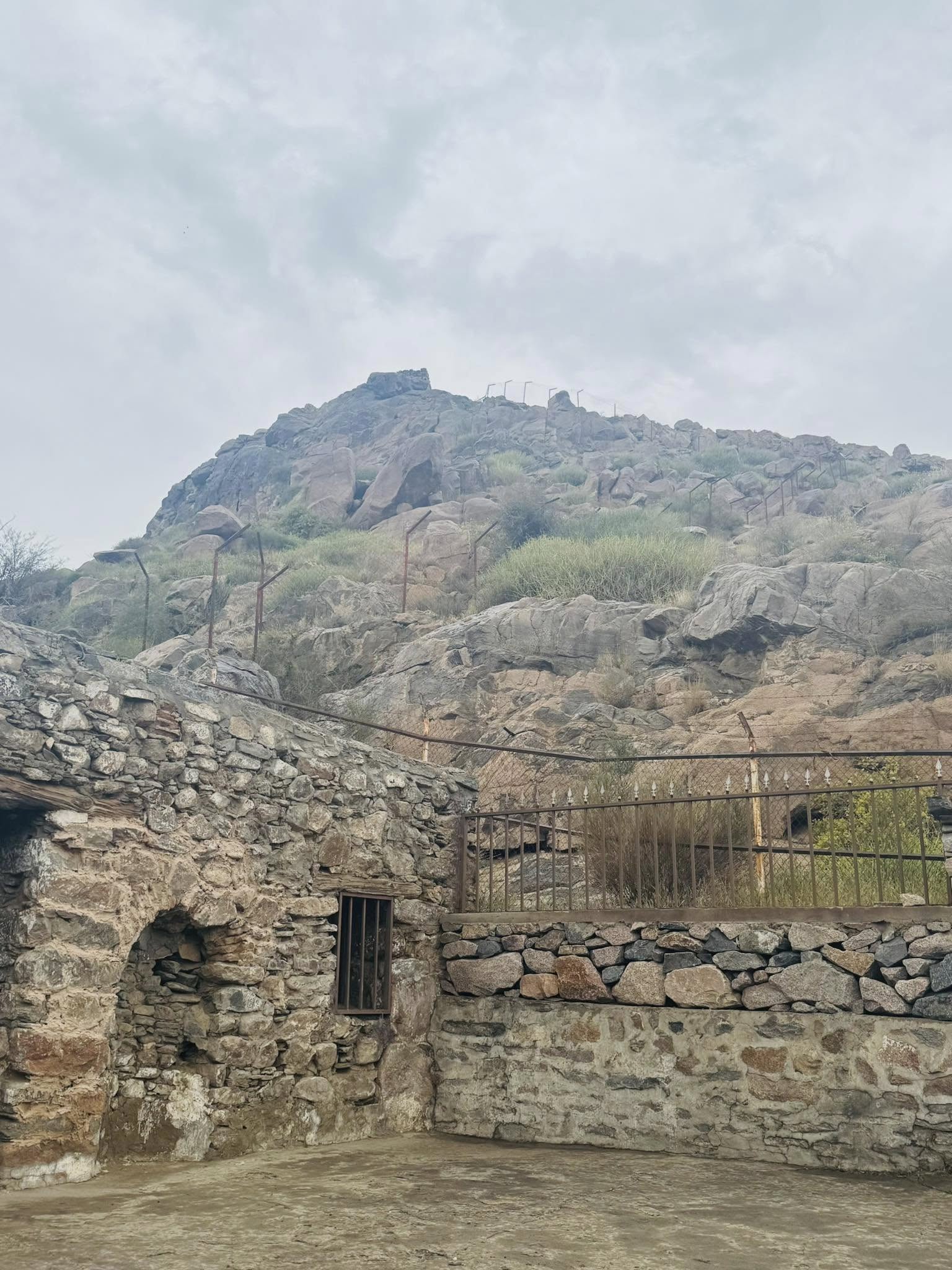
Following the loss of his closest protectors in Makkah, Prophet Muhammad ﷺ traveled to Taif alongside Zayd ibn Harithah (RA) in search of a supportive new base for the message of Islam. However, instead of finding refuge, they encountered severe hostility; the city’s leaders rejected the Prophet’s call to monotheism and incited a mob to pelt them with stones. Despite sustaining painful injuries and facing deep emotional exhaustion, this pivotal moment in Islamic history serves as a profound testament to the Prophet’s ﷺ resilience, patience, and unwavering commitment to his faith even under the most harrowing circumstances.
PLACES TO VISIT IN MADINAH

Al-Masjid an-Nabawi
Al-Masjid an-Nabawi, or the Prophet’s Mosque, is the second holiest site in Islam after the Masjid al-Haram in Mecca. It is located in Madinah, Saudi Arabia, and was originally established and built by the Prophet Muhammad ﷺ himself after his migration (Hijra). The mosque is the final resting place of Prophet Muhammad ﷺ, whose tomb is situated under the famous Green Dome in what was once his house. Throughout Islamic history, the mosque served not only as a place of worship but also as a community center, court, and school. It has undergone numerous expansions over the centuries and remains a major destination for millions of pilgrims visiting Madinah annually. A highly revered area within the mosque is the Rawdah ash-Sharifah (The Noble Garden), believed to be a part of Paradise.
Masjid Quba
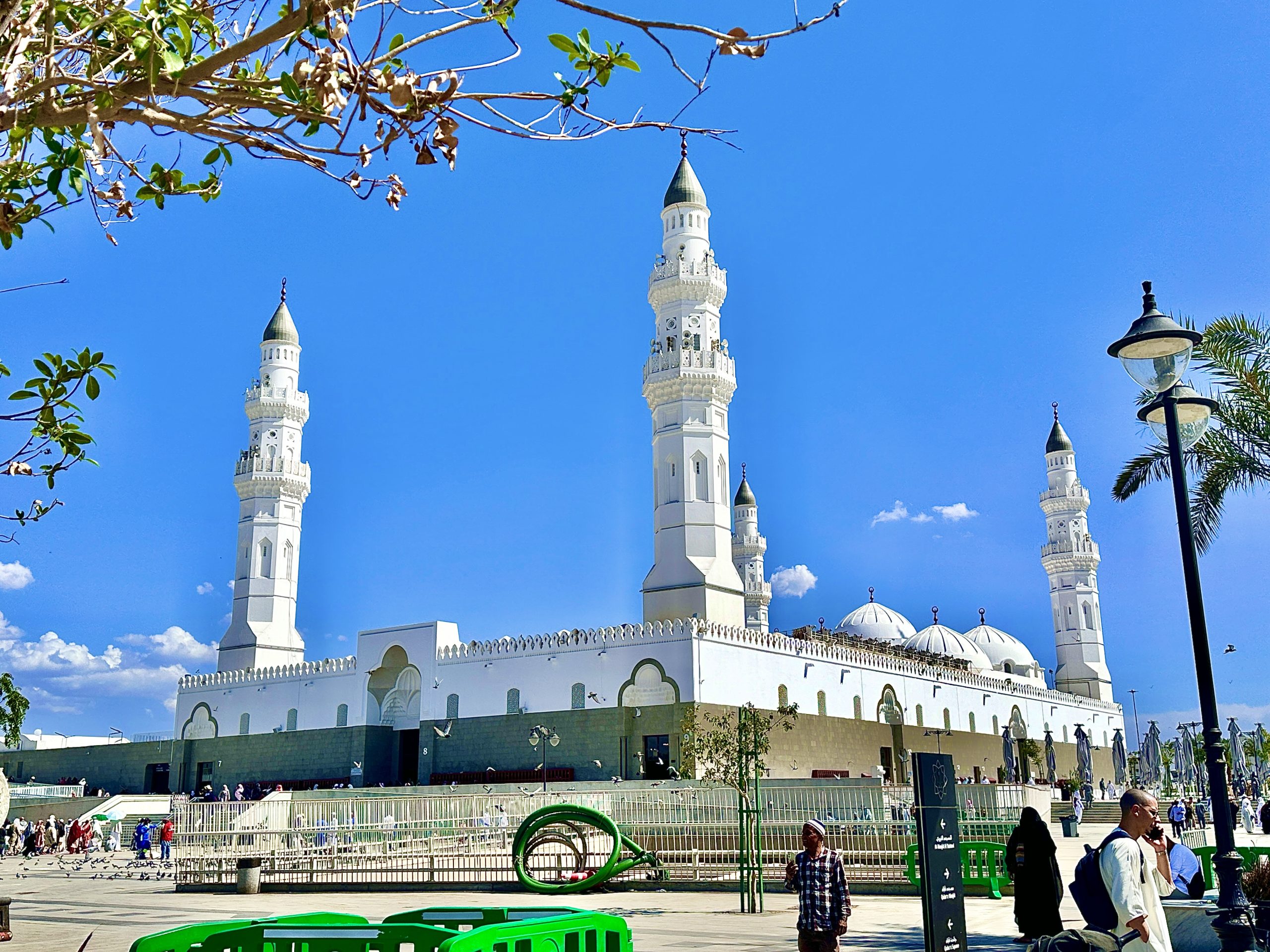
Masjid Quba, located just outside the central area of Madinah, holds the profound distinction of being the first mosque built in the history of Islam. Its foundation was laid by Prophet Muhammad ﷺ upon his arrival in Madinah after the Hijrah (migration) from Makkah. The Prophet himself participated in its construction, which is why the mosque is mentioned in the Qur’an as a place “founded on righteousness from the first day” (Surah At-Tawbah, 9:108). The Prophet ﷺ encouraged Muslims to pray there, stating that performing ablution at home and offering two units of optional prayer (2 Rakaʿaˉt) in Masjid Quba is equivalent to performing a minor pilgrimage (Umrah). Today, it is a magnificent architectural landmark and a mandatory stop for pilgrims and visitors to Madinah, symbolizing the very beginning of the Muslim community’s establishment.

Masjid Qiblatain
Masjid Qiblatain, located in Madinah, is one of the most historically significant mosques in Islam, earning its name, which translates to “Mosque of the Two Qiblas.” Its importance stems from a pivotal moment when the direction of Muslim prayer (Qibla) was changed. Initially, Muslims prayed facing Bayt al-Maqdis (Jerusalem). During a prayer led by the Prophet Muhammad ﷺ in this mosque, he received a divine revelation commanding him to turn and face the Kaaba in Makkah instead, as recorded in the Qur’an (Surah Al-Baqarah, 2:144). The Prophet ﷺ immediately turned, and the congregation followed suit, completing the prayer facing the new direction. This event, which occurred in the second year after the Hijra, forever established the Kaaba as the permanent Qibla for Muslims worldwide and symbolises the community’s obedience to divine command.

Al-Masajid Al-Sab’ah
Masjid Saba, or the Seven Mosques (Al-Masajid Al-Sab’ah), is a historically significant complex of small mosques in Madinah, located near Mount Sela’. Despite the name, the complex primarily consists of six historical mosques, though it is often referred to as seven because Masjid Al-Qiblatayn or the modern Masjid Al-Khandaq is sometimes included in the visitor’s itinerary. This sacred site is intrinsically linked to the Battle of the Trench (Ghazwat Al-Khandaq), as each small mosque marks the location where the Prophet Muhammad ﷺ or one of his key companions (like Salman Al-Farsi, Abu Bakr, Umar, and Ali) was stationed or prayed during the siege. The largest of the group, Masjid Al-Fath (Mosque of Victory), is believed to be the spot where the Prophet ﷺ prayed for three days, after which divine assistance led to the Muslim victory. The complex serves as a powerful reminder of the early Muslim community’s resilience, faith, and strategic defense of Madinah.

Jabal e Uhud
Jabal e Uhud, located north of Madinah, is a mountain of profound spiritual and historical significance in Islam. It is most renowned as the site of the Battle of Uhud in 3 AH, the second major military engagement between the early Muslim community of Madinah and the polytheists of Makkah. The mountain itself is deeply revered, as the Prophet Muhammad ﷺ said of it, “Uhud is a mountain which loves us and which we love.” At the foot of Jabal e Uhud lies the Martyrs’ Cemetery, the resting place of approximately seventy companions who were killed in the battle, including the Prophet’s ﷺ uncle, Hamza ibn Abd al-Muttalib, known as the “Master of Martyrs.” Today, pilgrims and visitors frequent the site to reflect on the early history and sacrifices made for the faith.

Jannat al-Baqi’
Jannat al-Baqi’ (often called Al-Baqi’), meaning “The Garden of Baqi’,” is the oldest and most significant Islamic cemetery in Madinah, Saudi Arabia. Located southeast of Al-Masjid an-Nabawi (The Prophet’s ﷺ Mosque), it holds profound spiritual and historical importance for Muslims worldwide. Established by Prophet Muhammad ﷺ shortly after his migration to Madinah, the cemetery is the final resting place for many of his relatives and thousands of his companions (Sahabah), including his son Ibrahim, his daughters, and several of his wives. The simple, unmarked graves reflect the Islamic principle of equality and humility in death. Despite several historical demolitions of mausoleums and structures built over the graves, Al-Baqi’ remains a revered site that pilgrims visit during Hajj and Umrah to pay their respects and reflect on the early history of Islam

Masjid al-Ghamamah
Masjid al-Ghamamah, located a short distance southwest of Al-Masjid an-Nabawi (The Prophet’s ﷺ Mosque) in Madinah, is a site of immense spiritual and historical significance. Its name, “Al-Ghamamah,” meaning “The Cloud,” is derived from a narration that a cloud miraculously shaded the Prophet Muhammad ﷺ as he led the Salat al-Istisqa(prayer for rain) here, which was immediately followed by rainfall. This sacred spot was also the traditional open-air prayer ground (Musalla) where the Prophet ﷺ frequently led the Eid prayers during the latter part of his life. Built on a simple rectangular design, the mosque features six distinct white domes and retains a classic, humble architectural style, making it a powerful landmark that connects visitors directly to the key prophetic traditions of communal worship and seeking Divine mercy

Masjid Jummah
Masjid Jummah (Jummah Mosque) is a historically significant holy site in Madinah, renowned as the location where Prophet Muhammad ﷺ led the very first communal Friday prayer (Jumu’ah Salah) after his Hijrah (migration) from Makkah to Madinah. This pivotal event, which formally established the congregational Friday prayer as a cornerstone of Islamic practice, took place in the valley of Ranuna, in the locality of the Bani Salim bin Auf clan. The mosque, which has been rebuilt and expanded over the centuries, is also known by other names, including Masjid Bani Salim and Masjid Al-Wadi. Today, it stands as a cherished landmark for pilgrims visiting Madinah, located approximately 900 meters north of the historic Quba Mosque.

Ghars Well (Bīr Ghars)
Ghars Well (Bīr Ghars) is a historically and spiritually significant well located in Madinah, renowned for its strong connection to the life of Prophet Muhammad ﷺ. He favored its water for its freshness, often drank from it, and performed ablution (Wudu) with it. Most notably, a profound tradition records the Prophet’s ﷺ instruction to his cousin, Ali ibn Abi Talib, to wash his body with seven buckets of its water after his passing, thus attributing immense sanctity to the well and referring to it as “my well” and a “spring from paradise.” Located in the Al-Awali district near Masjid Quba, Ghars Well remains a cherished landmark, attracting visitors who seek to connect with the early history of Islam and the blessed legacy of the Prophet ﷺ.

Garden of Salman Al Farisi
The Garden of Salman Al Farisi is a historic and revered site located in the city of Madinah. It is significant in Islamic history because it was the land used to purchase the freedom of the esteemed companion of Prophet Muhammad ﷺ, Salman Al Farisi. Salman was a slave to a Jewish master in Madinah. To secure his manumission, the Prophet Muhammad ﷺ and his companions planted 300 date palm shoots on this property as part of the compensation required by the master, with the Prophet ﷺ planting each one himself. The garden, which is now a private date farming area, remains a place of serenity where visitors can purchase dates and, in some accounts, taste the sweet water from the ancient well still present on the land.
A COLLABORATION OF